How to Open a Profitable Dark Kitchen in 2026: The Complete Checklist
How to open a dark kitchen in 2026: real budget, location, equipment, legal setup, and digital strategy to reach profitability fast. The BOFU guide.
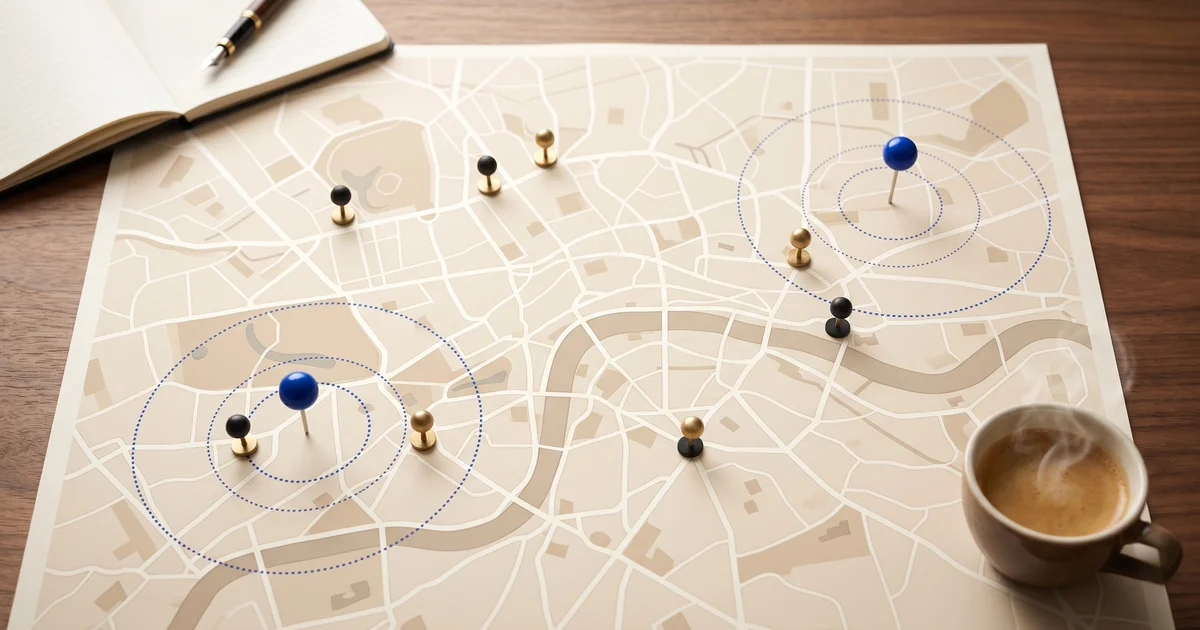
How do you open a dark kitchen in 2026 without blowing it? The model is no longer a niche. It has gone mainstream, structured, and competitive. The operators winning today are not the ones who had the idea first. They are the ones who execute cleanly at every stage: concept, location, equipment, legal setup, and above all a direct sales channel. This article gives you the full checklist, no fluff, with real budget ranges and a battle plan for the first 90 days. If you are seriously considering launching your own ghost kitchen, read all the way through.
Dark kitchen, cloud kitchen, ghost kitchen: what are we actually talking about?
All three terms describe the same reality: a foodservice operation with no dining room, no traditional storefront, dedicated exclusively to delivery and pickup. No table service, no expensive decor, no street-level rent. All the value is concentrated in production and distribution.
Three sub-models dominate in 2026. The single-brand model: one concept, one menu, one focused execution (for example, signature bowls or premium smash burgers). The multi-brand model: several virtual brands operated from the same kitchen, which spreads fixed costs and reaches multiple customer segments. The kitchen-as-a-service model: you lease your kitchen to other brands that produce from your space, a more capital-intensive but recurring approach.
Why does the model work in 2026? Three reasons: rent divided by 3 to 5 compared to a traditional restaurant of equivalent capacity, total focus on product and operations (no service overhead), and natural scalability (you add a concept or a site without starting from scratch). The US delivery market continues to grow, and consumers have permanently baked delivery into their weekly routines.
Choose your concept and positioning
This is the most underestimated step. Many founders open a “generalist” dark kitchen offering 40 items: pizza, burgers, salads, sushi, dessert. The predictable result: no clarity, no competitive edge, exploding food costs, and an unmanageable production sheet. The market does not reward generalists.
Define a razor-sharp niche before signing anything. Signature product: what will you do better than the 50 other options delivered within the same radius? Target customer: students, remote-working professionals, families, young urban professionals? Each one has a different average ticket, order timing, and product expectation. Price range: are you aiming for an average ticket of $14, $22, or $35? Dominant time slot: quick weekday lunch (office workers), weekend family dinner, or both?
Before investing $60,000, run a lightweight market test. Rent a shared commissary kitchen or a night in an existing restaurant for one to two weeks. Launch your menu via direct distribution in a specific neighborhood, measure repeat rate, average rating, and real food cost. That pilot week saves you from $35,000 mistakes in the following month.
Location: the number one criterion that gets ignored
“We are delivery only, location does not matter.” That is the myth that ruins 4 dark kitchens out of 10. Your location determines your delivery radius (3 to 5 miles maximum in dense urban areas, 7 to 10 miles in suburban zones), your rent cost, your logistics access for drivers, and the quality of your delivered product (transit time equals cold food).
Hard criteria to validate: population density within a 3-mile radius (target a minimum of 30,000 residents for a single-brand operation), office or residential mix based on your target (office workers means business districts, family dinners means residential), vehicle access with temporary parking for drivers (a driver who struggles to park will not come back), zoning that allows a commercial kitchen (verify with your local planning department before signing), and of course rent per square foot.
Typical ranges in the US: $25 to $50 per sqft annually in suburban or light-industrial zones, $50 to $120 per sqft in secondary urban cores, $120 to $250 per sqft in prime city centers like Manhattan or downtown San Francisco. The immediate near-suburban ring (within 10 minutes by scooter or e-bike of a dense zone) is almost always the best tradeoff. Minimum footprint: 300 to 500 sqft for a solo single-brand operation, 650 to 1,100 sqft for multi-brand or shared kitchen setups. Also budget $10,000 to $25,000 for build-out and code compliance depending on the condition of the space.
Signing your lease next week?
Get your digital launch ready in parallel. Website, native iOS and Android apps, loyalty program, integrated payments: everything is live in 72 hours, no custom development.
Legal and administrative setup: what to plan ahead
The legal side is less glamorous but blocking if you neglect it. The right move: lock everything down before signing the commercial lease.
The legal structure depends on your projection. A sole proprietorship works for testing a concept in lean mode, but most serious operators form an LLC from day one for liability protection. Move to an S-Corp election or a full C-Corp once you project more than $150K in annual revenue or bring on partners. The Inc. structure becomes necessary for ambitious projects targeting outside investment.
The steps to close out in order:
- Register your business entity and obtain an EIN from the IRS
- NAICS code: 722513 (limited-service restaurants) or 722515 (snack and nonalcoholic beverage bars) depending on your dominant offering
- Local business permits and certificate of occupancy from your municipality
- HACCP food safety plan (written hazard analysis and critical control points)
- ServSafe Food Handler certification for all kitchen staff (and ServSafe Manager for the responsible operator)
- Liquor license if you sell alcohol with delivery (state and local rules vary widely)
- Data privacy compliance for your customer database (CCPA in California, privacy policy and consent flows everywhere)
- General liability insurance and commercial property coverage
For up-to-date guidance on business setup, refer to the SBA and food safety rules from the FDA. Expect 2 to 6 weeks between filing your applications and getting full clearance to open, with significant variation by city.
Minimum equipment to get started
Equipment is the line item that overruns the easiest. Stick to the essentials, then adjust after 2 months of real operation.
Pro kitchen equipment: gas range or induction cooktop, single or double-basket fryer, flat-top griddle, oven (combi if budget allows), code-compliant exhaust hood. Plan $6,000 to $18,000 minimum depending on new or used. Refrigeration and freezing: walk-in cooler or reach-in fridges plus a commercial freezer, $2,500 to $6,000. Small equipment: slicer, food processor, scales, utensils, pots and full-size hotel pans, $1,800 to $3,500. First-month packaging: containers, bags, labels, sealing film, $600 to $1,800 depending on forecasted volume.
Realistic total budget for the “hard” side: $15,000 to $35,000. You can cut 30 to 50% by buying used through restaurant equipment brokers, estate sales, or specialized auction platforms. Watch out for code (gas, electrical, ventilation): cheap non-compliant equipment costs more in rework than buying new.
Full startup budget summary for a clean launch:
| Line item | Low end | High end |
|---|---|---|
| Kitchen equipment | $15,000 | $35,000 |
| Build-out and code compliance | $10,000 | $25,000 |
| Security deposit + first month rent | $4,000 | $15,000 |
| Initial food and ingredient inventory | $2,500 | $6,000 |
| Digital launch and marketing | $2,500 | $7,500 |
| 3 months working capital (fixed costs) | $10,000 | $18,000 |
| Total | $44,000 | $106,500 |
Digital strategy: your dark kitchen only exists through your site and app
Here is the blind spot that kills margins. A dark kitchen without a direct sales channel is fully dependent on third-party aggregator platforms, which take 25 to 35% commission on every order. On an average ticket of $28, that is $7 to $10 going to commissions before you even pay for food, rent, or labor. No business model survives that level of skim for long.
The strict minimum to exist directly: a responsive website with online ordering, a native iOS and Android mobile app to retain customers and send push notifications (app push converts vastly better than email), integrated payments on your own Stripe account (the money lands directly in your bank, at 2.9% + $0.30 per transaction), a loyalty program with configurable points, referral, promo codes, and automated promotions (happy hour, lunch menu, weekend). And of course driver fleet management, in-house or hybrid with a logistics partner.
Building all of that custom costs $20,000 to $70,000 and takes 4 to 9 months. That is exactly what our solution delivers in 72 hours, in a fixed monthly subscription, with no custom development. For setup details, read our guide to launching your app in 72 hours and our analysis on managing your delivery fleet. The monthly cost of an all-in-one solution is trivial compared to the platform commissions you avoid: check our pricing for the details.
The first 90 days after opening
The classic mistake: open, get the launch buzz, then drift. Here is the roadmap that actually works.
Month 1, operational calibration. You test real prep times, refine your recipe specs, identify items that are too slow or under-margined. Volume is intentionally capped, you are looking for stability before growth. You listen to every customer review as if it were worth $1,000. The menu can drop 30% of its SKUs between week 1 and week 4. That is normal.
Month 2, ramp volume through platforms for acquisition. Aggregators are expensive but excellent at putting your brand in front of thousands of customers in a few weeks. In parallel, you activate your direct channel from day 1: site, app, loyalty, notifications. Every delivery bag carries a flyer or QR code pushing the customer to your app, with a strong incentive (first-time promo code, welcome points, free item on the second order).
Month 3, gradual migration of loyal customers to the direct channel. This is where profitability takes off. A customer ordering through your app instead of the platform earns you $7 to $10 more per order. To structure that migration, read our complete method on leaving delivery platforms and on the loyalty mechanics that actually retain.
Side-by-side comparison, dark kitchen vs traditional restaurant:
| Criterion | Dark kitchen | Traditional restaurant |
|---|---|---|
| Typical monthly rent | $1,500 to $4,500 | $5,000 to $20,000 |
| Initial equipment | $15K to $35K | $50K to $150K |
| Potential net margin | 12 to 22% | 6 to 15% |
| Scalability | High (multi-brand, multi-site) | Low (each site is its own project) |
| Platform dependency | Critical to control | Moderate |
Your dark kitchen opens in 90 days?
Put your direct channel in place from day 1. Website, iOS and Android apps, loyalty, your own Stripe account: everything ships in 72 hours, in a fixed monthly subscription.
Start my free trialConclusion: making the leap
Opening a profitable dark kitchen in 2026 is no longer a matter of luck, it is a matter of execution. Let us recap the non-negotiables:
- Razor-sharp concept from day one: no generalist menu, one signature product and a clear target.
- Validated location on density, driver access, and zoning before signing the lease.
- Legal setup closed out before opening: entity, EIN, NAICS, HACCP, ServSafe, data privacy.
- Realistic budget between $40,000 and $100,000 all in, with 3 months of working capital.
- Direct channel activated from day 1: without your own site and app, you pay 25 to 35% in commissions forever.
Action starts today. While you finalize your lease and equipment, prepare your digital launch so it is ready the day you open. A single month without a direct channel is 25 to 35% of margin lost that never comes back. Book a demo of our solution, compare calmly on our pricing page, and launch your dark kitchen on solid foundations from the very first order.
Frequently asked questions
What budget do I need to open a dark kitchen in 2026?
Plan on $40,000 to $100,000 all in: equipment ($15K to $35K), build-out and code compliance ($10K to $25K), security deposit, three months of working capital, digital launch, and initial inventory.
Is a dark kitchen really profitable given platform commissions?
Yes, if you activate a direct channel from month 2. Without your own website and app, you lose 25 to 35% of every order in commissions. Profitability comes from gradually shifting volume toward direct orders.
What is the minimum square footage for a dark kitchen?
300 to 500 sqft for a solo single-brand operation, 650 to 1,100 sqft for a multi-brand concept. Plan 40% for production, 30% for cold and dry storage, and 30% for dispatch and the driver pickup zone.
What legal structure should I choose for a dark kitchen?
A sole proprietorship works for testing the concept lean, but most operators incorporate as an LLC from day one for liability protection. Switch to an S-Corp election or full Inc. once you project more than $150K in annual revenue or plan to bring on partners or investors.
How long does it take to reach profitability?
A well-positioned dark kitchen hits break-even between 4 and 9 months. The pace depends directly on how fast you acquire direct customers and reduce your dependency on third-party platforms.
Get hands-on with XPRIO
Mobile app, website, order management: all live in 72h. No commitment.
Start my free trialRelated articles
Click & Collect, Delivery, or Pickup: Which Channel Should Your Restaurant Choose in 2026?
Click and collect, delivery, or takeout: a complete comparison of costs, margins, and strategy to pick the right channel for your restaurant in 2026.
How Much Do Delivery Platforms Really Cost a Restaurant Owner in 2026?
Delivery platform commission, hidden fees, margin impact: a full breakdown of the real costs and viable alternatives in 2026.
Restaurant Loyalty Program: 5 Levers That Bring Your Customers Back in 2026
The 5 restaurant loyalty program levers that bring your customers back in 2026: points, referrals, promo codes, happy hour, and push notifications.